
Leadership Influence – Why AI Should Not Choose What We Read
I’m getting feedback from leaders on my new leadership development book, Character Mandate. The current subtitle is: Winning Strategies for Leading in the AI Revolution. For the most part, there’s a blank look…until I mention the real subtitle: Will we lead AI? Or, will it lead us?
100% of the time, leaders from every sector respond with a concern or question that they’ve been thinking about. This comment from a high-character dad of 3 who’s a high-level Millennial engineer piqued my interest: “I think the real question is: Will we lead AI? Or, will AI enslave us?”
Enslaved – that’s extreme, isn’t it?
As I’m pondering, it seems that this author has an interesting take on one aspect of AI.
I’m curious about your thoughts on AI. What areas do we need to be concerned about as senior leaders? Middle management? Parents? Grandparents? I look forward to hearing from you.
Author: Jan Zucker
Date: 29 May 2025
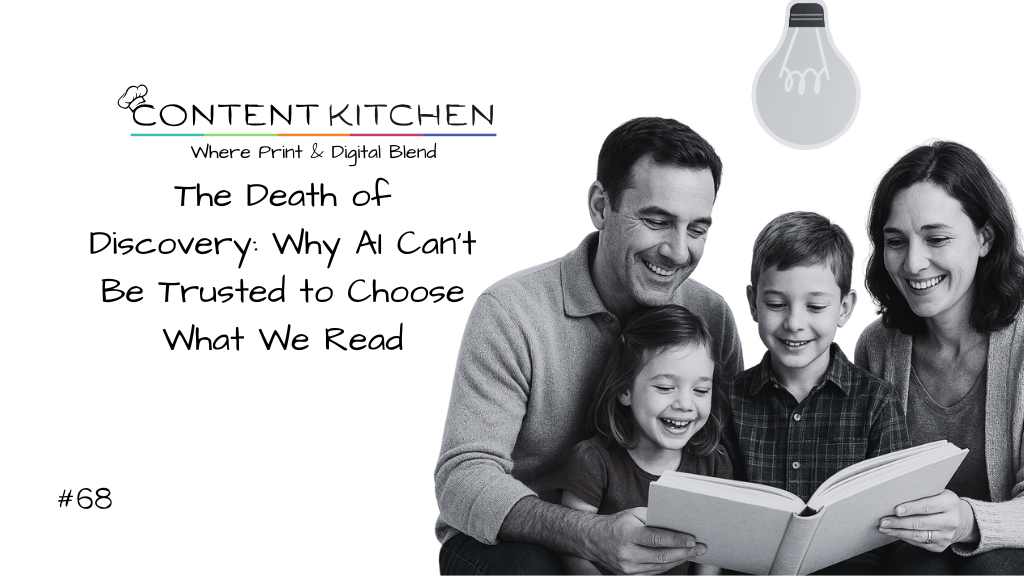
Title: The Death of Discovery: Why AI Can’t be Trusted to Choose What We Read, on LinkedIn
How was your week? Mine? I’m angry and scared at the same time. Why, you ask? Keep reading to find out.
I’ve been doing much thinking about where we’re headed—and what we’re losing along the way. As much as I think AI is a game changer, there are areas I consider TABOO! Here’s #1 on that list.
Recently, I’ve noticed a surge of enthusiasm surrounding AI-powered reading tools. “Smarter, faster, more efficient,” they say. “Why read a whole book when AI can summarize it for you?” Platforms like BooSum promise to cut through the clutter and give you just the good stuff.
Sounds helpful, right?
Except it’s not.
As someone who has spent decades in publishing, I can tell you that what these tools are calling “irrelevant” is often the soul of the story.
What We Lose When AI Reads for Us
It starts small—skip a few descriptive paragraphs here, trim some background there. But pretty soon, you’re not reading a book anymore. You’re reading a machine’s idea of what’s important. No voice. No mood. No mess. Just bullet points and takeaways.
Here’s what gets lost in the process:
- The sentence that hits you like a punch in the chest
- The throwaway line that becomes a lifelong philosophy
- The slow build that makes the payoff worth it
- The feeling that you’re inside someone else’s mind, not a software manual
These aren’t bugs of real reading, they’re the features.
Why It Matters for Publishing—and All of Us
AI tools aren’t just distilling content, they’re sterilizing it. When algorithms decide what matters, they flatten voices, erase risk, and chip away at what makes literature feel human.
We’ve seen what happens when platforms take control of discovery: they push sameness. They prioritize trends. And the authors who don’t fit the mold? They vanish from view.
Now imagine AI doing that with your reading list. With your bookshelf. With your mind.
And if you’re thinking, “Jan, this sounds dramatic,” maybe. But look around—books are already being shaped to survive the algorithm. Faster intros. Cleaner structure. Simpler language.
It’s not just content that’s being optimized. It is the creators.
This Isn’t Just a Publishing Issue. It’s a Human One.
In the rush to “simplify reading,” new tools are gutting the soul out of the experience. They reduce books to bullet points. They flatten nuance. They tell your audience, “Don’t worry about reading the whole thing—here’s what we think is important.”
That should terrify every creator.
Because when discovery is handed over to machines, the richness of your voice, your pacing, your style gets lost.
And when that’s gone, what’s left?
Commodity content. Disposable ideas. Forgettable impressions.
Reading has never been about efficiency. It’s about getting lost. Slowing down. Getting uncomfortable. Coming out the other side changed.
When AI tools start telling us what we can skip, they’re not just editing books. They’re editing our attention. Our empathy. Our ability to sit with complexity.
And most people won’t even notice what they’ve lost—until it’s gone.
So, What Do We Do?
We resist the shortcut.
At DCCVanguardian, we believe in publishing that preserves the full human experience. That’s why our first imprint, The Influencer is the Message, isn’t just about books; it’s about control. It’s about legacy. It’s about making sure your voice doesn’t get flattened by someone else’s idea of what matters.
We’re not just publishing books. We’re building platforms of permanence. Giving creators a way to own their content, protect their influence, and make sure their ideas survive—even when the algorithms forget them.
And this fight isn’t just creative, it’s legal.
Warmly,
Jan Zucker
CEO, Digital Content Creators

Let’s discuss a tailor-made interview to meet your audience’s needs.
Virtual speaking event? No problem!
Check out my Speaker page HERE.
To schedule a call, contact me at danita@danitabye.com
No Comments