


Building Character and Courage: The Core of Leadership Development
Building our character is as vital as strengthening our physical core. It’s also a core of leadership development,
A strong physical core improves balance and stability. It allows us to act freely. Likewise, a strong character core supports all our actions, helping us lead with integrity and purpose.
In leadership, character and courage are two foundational traits that determine not only how we influence others but also how we respond to challenges and create lasting impact. Let’s explore the four types of leaders that emerge when we examine these two key traits: courage and character.
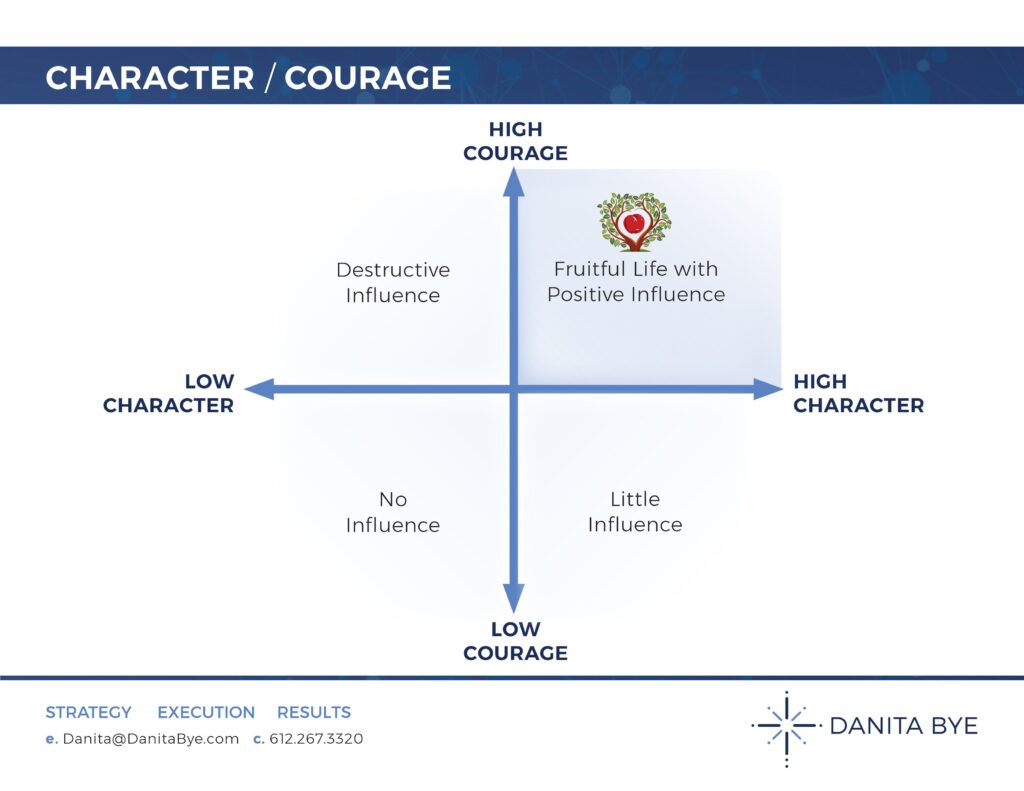
1. The Courageous and Character-Driven Leader (Upper Right Quadrant)
Leaders who exhibit both courage and character represent the ideal leadership profile. These leaders consistently make tough decisions with integrity and clarity, even when faced with obstacles, uncertainty, or adversity. Their courage enables them to take risks, make bold moves, and advocate for change. However, it is their strong character that ensures they do so with ethical principles in mind.
Such leaders build trust with their teams by communicating openly, maintaining transparency, and demonstrating accountability. Their actions align with their values, fostering a sense of security and respect among their followers. Because they lead with both character and courage, they inspire confidence and loyalty. People are willing to follow them because they know that their decisions are made with both the good of the team and the organization at heart.
Furthermore, these leaders understand the long-term implications of their decisions, carefully weighing the risks and rewards. They take responsible risks, fully aware of the consequences, and have the moral backbone to face any fallout. This combination of courage and character gives them the ability to drive change while preserving the trust and respect of their followers. In essence, these leaders not only change the world but do so in a way that benefits others, earning them admiration and fostering an environment of mutual respect and growth.
2. The Courageous but Character-Deficient Leader (Upper Left Quadrant)
While courage is an essential trait for leadership, it is not enough on its own. Leaders who possess courage but lack character may initially appear inspiring due to their boldness and willingness to face challenges head-on. However, their lack of character becomes apparent over time. These leaders may act impulsively, disregarding ethical considerations in the pursuit of their goals. Their decisions may be self-serving, and their motives become increasingly questionable as they prioritize results over relationships.
Although these leaders can achieve short-term successes, the consequences of their actions can be damaging in the long run. Without strong character, trust erodes. They may manipulate, deceive, or act dishonestly to get what they want, leading to a toxic culture where fear and distrust dominate. Employees may feel used or betrayed, and colleagues may hesitate to collaborate with them, ultimately diminishing the leader’s ability to influence and inspire others.
This type of leader often experiences high turnover and low morale within their teams. While their courage can bring results, it comes at the expense of integrity and trust. In the end, their ability to influence is compromised, and their leadership may have lasting negative effects on the organization’s reputation and long-term success.
3. The Character-Driven but Courage-Lacking Leader (Lower Right Quadrant)
Leaders with high character but low courage often possess strong moral principles, but their reluctance to take risks or confront difficult challenges leaves them with little influence. These leaders may be highly ethical, consistently making decisions that reflect their values and the best interests of their team or organization. However, their fear of failure, lack of initiative, or unwillingness to step outside their comfort zone hampers their effectiveness.
Although these leaders have admirable qualities, such as trustworthiness, integrity, and empathy, their failure to take decisive action or pursue ambitious goals means they struggle to gain the respect of others. Their avoidance of challenges and reluctance to make bold decisions lead to stagnation, missed opportunities, and a lack of vision. People may appreciate their character but grow frustrated with their inability to lead in dynamic, competitive environments.
In many cases, these leaders avoid making the tough decisions or taking the risks necessary to move their organization forward. They may be seen as too passive or indecisive, which erodes their influence. While their character remains strong, the lack of courage means that their leadership is ineffective in driving change or inspiring others to take action.
4. The Weak and Ineffective Leader (Lower Left Quadrant)
Leaders with low character and low courage represent the most destructive type of leadership. These individuals lack the moral framework needed to guide their actions and decisions, leading to unethical behavior, manipulation, and a disregard for the well-being of their teams or organizations. At the same time, they lack the courage to take any meaningful action or stand up for what’s right. This combination leaves them ineffective and unable to inspire any real change or growth.
Such leaders are often seen as self-serving, indecisive, or lacking in conviction. Their lack of integrity creates a toxic culture of mistrust, where people feel disengaged or alienated. These leaders may be ineffective at managing teams, building relationships, or making progress on important goals. Because they do not take action or make ethical decisions, they fail to create a positive impact and often foster an environment of uncertainty and dysfunction.
Without courage, they avoid confrontation and responsibility, and without character, they exploit opportunities for personal gain. As a result, they lack both the ability to influence others and the trust of those they lead. These leaders are often seen as obstacles to progress and can cause lasting damage to their organizations.
Final Thoughts
In the world of leadership, character and courage are essential building blocks. While some leaders may possess one without the other, it is the combination of both that allows leaders to make ethical, bold decisions that positively influence others and create a lasting impact. Whether a leader exhibits strength of character, courage, or both, understanding these traits is crucial for building effective, responsible leadership that drives long-term success and fosters trust within organizations.
Copyright, Danita Bye 2025
su_box title=”Need fresh insights for your next podcast series? ” style=”soft” box_color=”#5c83c2″ title_color=”#262729″ radius=”6″]

Let’s discuss a tailor-made interview to meet your audience’s needs.
Virtual speaking event? No problem!
Check out my Speaker page HERE.
To schedule a call, contact me at danita@danitabye.com[/su_box]
No Comments