


How Strong Leaders Resist Spiritual and Digital Noise
Before you read this article, a brief explanation may be helpful.
I gave ChatGPT the following instructions:
1.) Use Rabbi Jonathan Sacks’ quote on gossip from his leadership book;
2.) Refer to my previous article on Blue Zone and Red Zone cultures and the detrimental impact of gossip;
3.) Connect the ideas to the leadership framework being developed in Character Mandate; and
4.) Explore the growing importance of truth in an Age of AI increasingly shaped by algorithms, misinformation, manipulated narratives, and digital distortion. In such an environment, leaders must become people of truth who respect the dignity and value of every human being.
What follows is the article ChatGPT generated from those prompts. I have not edited the piece. While the writing itself is AI-generated, the ideas, concerns, themes, and leadership principles reflect much of what I have been thinking and writing about recently. So, reader beware: these are my ideas — but not my writing.
The Character Crisis Behind Spiritual and Digital Noise
In his book Lessons in Leadership, Rabbi Jonathan Sacks once wrote, “Gossip kills three people: the one who says it, the one it is said about, and the one who listens in.” That sentence stopped me in my tracks the first time I read it in Lessons in Leadership.
At first glance, the statement sounds dramatic. Kills? Really?
But the older I get, the more I believe he was right.
Not long ago, a colleague walked out of a church prayer meeting glowing with enthusiasm. “What a wonderful prayer time with the pastoral team,” he said. “It was so uplifting.”
A couple of weeks later, I ran into the pastor. Almost immediately, he began offering unsolicited advice about my leadership, my decisions, and even perspectives about my family. The entire conversation felt strange. We didn’t serve on committees together. We rarely talked. He wouldn’t have naturally known many of the things he referenced.
I walked away wondering, How did this pastor suddenly gather information and opinions about me?
Then the thought hit me.
What if the “prayer meeting” had quietly drifted into something else?
What if the gathering had become a spiritually sanitized gossip session disguised as concern?
What if people were “sharing prayer requests” that were actually criticism, frustration, speculation, or veiled judgment?
And then a more uncomfortable question surfaced in my own heart:
How often do we think we are praying for people when we are actually damaging them?
The Age of Spiritual and Digital Noise

We are living in an era saturated with noise.
Digital noise.
Political noise.
Emotional noise.
Spiritual noise.
Every day, leaders are bombarded with rumors, outrage, accusations, emotionally charged narratives, manipulated images, AI-generated misinformation, and endless opinions flowing through social media, news feeds, group chats, and even church conversations.
In today’s AI-driven world, discernment becomes one of the leader’s most important responsibilities. Leaders who casually repeat rumors, assumptions, or emotionally charged narratives without discernment can unintentionally amplify falsehoods at incredible speed. Strong leaders understand that wisdom requires restraint.
That reality makes it increasingly important for leaders to guard their tongue carefully.
In such an environment, leaders must become people of truth who respect the dignity and value of every human being – whether they are in the room or not.
Perhaps nowhere is this more dangerous than inside spiritual communities, where gossip often disguises itself as “concern,” “discernment,” or “prayer.”
That realization led me back to Rabbi Sacks’ warning and to an article I previously wrote about Blue Zone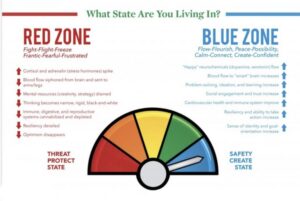 versus Red Zone cultures. In that article, I explored how gossip destroys engagement, trust, connection, and flourishing in organizations.
What I’m now realizing is this: gossip doesn’t just destroy businesses and teams. It can quietly destroy churches, ministries, friendships, marriages, and leadership communities too.
When Prayer Becomes Part of the Noise
The danger is especially great because spiritual gossip often hides behind religious language.
“We just need to pray for her…”
“I’m concerned about him…”
“You probably should know…”
“Let me share this so we can lift them in prayer…”
But sometimes what follows is not intercession. It is information-sharing wrapped in spiritual packaging.
And the damage is real.
Rabbi Sacks connected this teaching to the Jewish understanding of lashon hara — “evil speech.” The rabbis considered harmful speech among the gravest sins because words shape cultures, relationships, and identities. Once spoken, destructive words spread quickly and rarely disappear completely.
That sounds remarkably relevant in the digital age.
Today, one careless sentence can spread through a church, a business, or an online community within hours. A rumor repeated emotionally often becomes accepted as truth before facts are ever verified.
Spiritual noise and digital noise feed each other.
Both thrive on emotional reactions instead of careful discernment.
Both reward speed over wisdom.
Both tempt leaders to speak before they truly know.
In my Blue Zone leadership article, I contrasted healthy “Blue Zone” cultures with toxic “Red Zone” cultures. Blue Zones are built on trust, gratitude, connection, encouragement, and shared purpose. Red Zones are marked by criticizing, condemning, and complaining — what I call “CCC behaviors.”
Prayer gatherings can become either one.
A Blue Zone prayer culture strengthens people. It protects dignity. It builds faith. It seeks restoration. It inspires compassion and wisdom.
A Red Zone prayer culture tears people down while pretending to help them.
Words Create Emotional Climates
The frightening part is that spiritual gossip often feels righteous. That’s what makes it so deceptive.
Sometimes we justify our words because our concerns are technically true. But truth alone does not make speech wise, loving, or necessary.
The Apostle Paul warned believers to avoid “unwholesome talk.” Proverbs says, “A gossip separates close friends.” James compares the tongue to a spark that can set an entire forest on fire.
Why? Words create emotional climates.
When gossip dominates a culture, trust evaporates. People become cautious. Defensive. Political. Fearful. They stop sharing openly because they assume every struggle may become tomorrow’s “prayer request.”
Once that happens, authentic community dies.
Ironically, the very thing prayer meetings are supposed to create — healing, unity, encouragement, and spiritual support — begins to disappear.
And in today’s world of spiritual and digital noise, emotionally charged speech spreads even faster than ever before. Leaders are constantly tempted to react, repost, repeat, and speculate before slowing down long enough to ask: Is this true? Is this necessary? Is this loving?
Character-driven leaders learn to resist that temptation.
Five Character Disciplines for Healthy Prayer Cultures
So how do we pray for people without slipping into gossip?
 I believe it starts with five disciplines rooted in strong character leadership.
First, ask: Would I say this if the person were standing beside me?
That single question eliminates enormous amounts of unhealthy conversation.
Second, share less detail.
Many prayer requests do not require extensive background information. God already knows the details. We often share far more than is necessary.
Instead of:
“Did you hear about all the problems in their marriage?”
We might simply say:
“Let’s pray for healing, wisdom, and strength for this couple.”
That approach preserves dignity.
Third, check your heart motivation.
Do I genuinely want restoration for this person? Or do I secretly enjoy sharing the information? Gossip often feeds our desire to feel important, informed, superior, or included.
Fourth, whenever possible, pray with people rather than merely talk about them.
Imagine how church cultures would change if we moved from discussing people who are struggling to lovingly inviting them into prayer, encouragement, mentoring, and support.
Fifth, become a guardian of absent people.
One of the greatest marks of strong character leadership is protecting people when they are not in the room.
That means redirecting conversations, refusing speculation, shutting down character attacks, and resisting the temptation to join criticism disguised as concern.
Giving Life Instead of More Noise
In my article, Start Improving Results NOW by Stopping Gossip and Dismantling the Red Zone I wrote that gossip “kills relationships. It destroys connection. It steals community.”
I believe that is true spiritually as well.
When prayer becomes gossip, we are no longer participating in healing. We are participating in destruction.
And in a world already drowning in spiritual and digital noise, leaders of character must become guardians of truth, restraint, wisdom, and dignity.
But there is another path.
A true Blue Zone prayer culture is possible.
Imagine prayer meetings where people leave feeling safer, not exposed.
Where confidentiality is honored.
Where compassion replaces curiosity.
Where restoration matters more than information.
Where leaders protect people instead of discussing them.
Where prayer becomes a place of healing rather than subtle character assassination.
That kind of culture creates trust.
It creates connection.
It creates life.
And perhaps that is the deeper invitation hidden inside Rabbi Sacks’ warning.
If gossip kills three people, then gracious, wise, faith-filled speech may also give life to three people:
the one who speaks,
the one who listens,
and the one being spoken about.
© Danita Bye. Worked with AI and Hemingway for readability.

Let’s discuss a tailor-made interview to meet your audience’s needs.
Virtual speaking event? No problem!
Check out my Speaker page HERE.
To schedule a call, contact me at danita@danitabye.com
No Comments