
Leadership Skills: How to Transform Trust into Leadership Currency in the AI Revolution(YouVersion)
AI is transforming our businesses and our culture. Interestingly, I’ve been re-reading a classic, Amusing Ourselves to Death, by Neil Postman. The book seems insightful, prophetic book from a leadership development perspective. Have you read it yet?
If not, it’s worth reading. If so, it’s worth re-reading to consider his insights.
Since this classic is fresh on my mind, this comment by Kay Rubacek in The Birth of A Hybrid Culture (Epoch Times) caught my attention: “The media theorist Neil Postman warned decades ago that technology doesn’t just serve culture, it becomes culture. He wrote that every new medium redefines what truth means and how it’s recognized. Television, he said, turned all serious discourse into entertainment. The internet accelerated that trend. And now, with artificial intelligence, the medium itself has learned to invent the message.”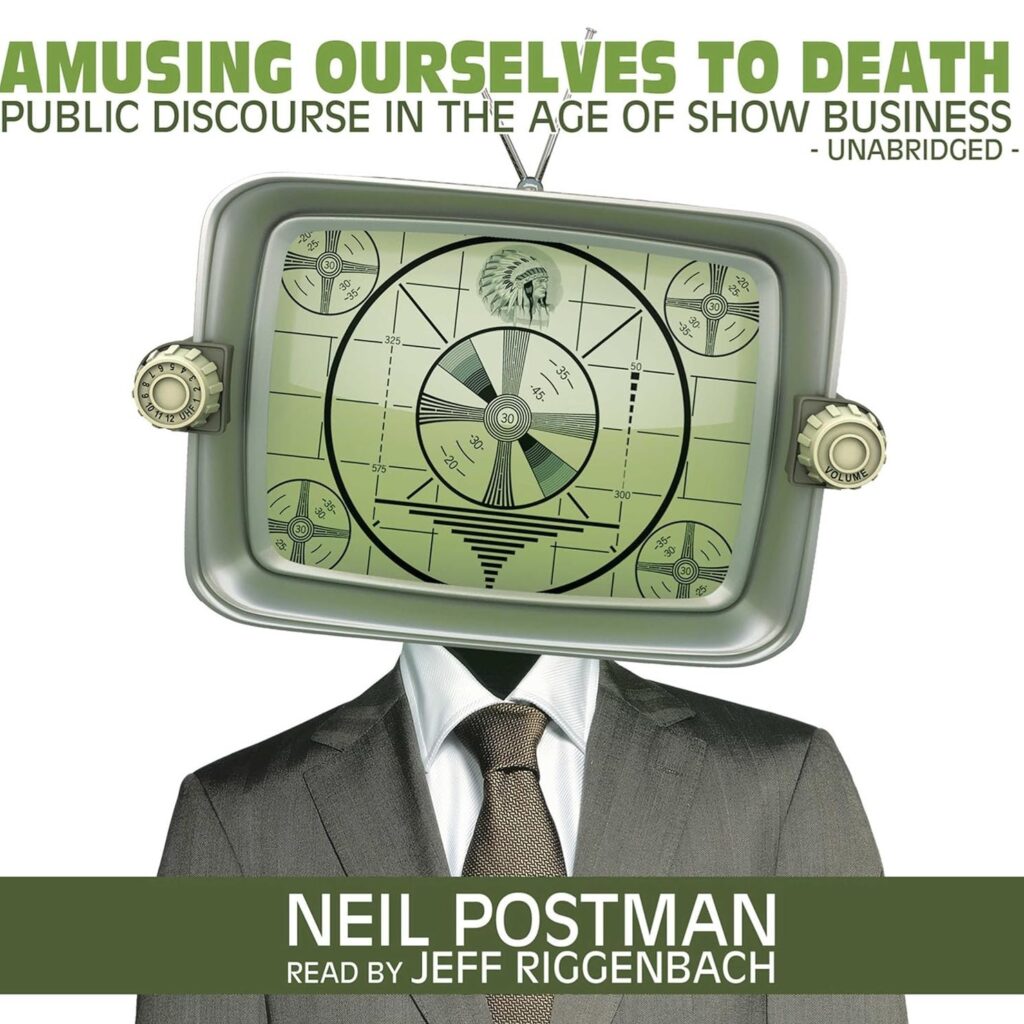
Then, I read this paragraph: “Social media taught us to perform rather than connect; generative systems now tempt us to generate rather than create. Both replace reflection with reaction and truth with trending consensus.”
Isn’t this true?!?
- “Social media taught us to perform, rather than connect…”
- Generative (AI) systems now tempt us to generate rather than create.”
Kay continues, “Real creativity is truth translated through imagination. It requires time, mastery, and inner stillness. It refines not only the work but the soul. Synthetic creativity rearranges fragments of past expression to simulate originality. The result can astonish us, but it cannot transform the one who made it because no one made it.”
What does this have to do with Trustworthiness?
I believe that in this rapidly shifting culture, Trustworthiness is needed more than ever!
This is my original YouVersion Devotional on Trustworthiness. It’s followed by some updated insights based on how much the world has changed with the advent of AI.
That’s where the D.A.K.O.T.A. Framework, which I write about in the YouVersion devotional series entitled Millennials Matter – Go and Make Discipling Leaders, comes in. I developed this simple yet powerful roadmap to help you lead with character in the AI Era. I trust you find helpful insights in both the original version and the updated comments:
 Original YouVersion: Trustworthiness
 Original YouVersion: Trustworthiness
Mentor Trustworthiness
“We lose influence as soon as we’ve lost someone’s trust. Cultivating a courageous character core requires that we, as followers of Jesus Christ, be trustworthy. Trustworthiness must be demonstrated for and nurtured in young Christian leaders. Millennials, particularly, have been wounded since many trust scandals hit America during their impressionable years. Consequently, they’re slow to trust and to know how to exhibit trustworthiness.
Trustworthiness comes when you are worthy of being trusted by others, especially when facing moral and ethical challenges. One of the biggest driving forces of trust is when we are committed to serving others and to seeking God’s best for them. Moses was trustworthy. So was Joshua.
People follow someone they trust, particularly in matters of faith. So how do you grow a trustworthy character in your young Christian leader? As a Christian mentor, you:
- are consistent and dependable
- can be relied on to tell the truth
- are on your mentee’s side and always have their best interests at heart
- are always honorable in words and actions
- act like a real person, not someone in a role
- allow your mentee latitude to think; you don’t just give your conclusions
- challenge their assumptions to help them uncover false assumptions
- are motivated to always do the right thing
- are constantly finding new ways to be of greater service
When we mentor trustworthiness, we strive to demonstrate a solid character core and frequently encourage the same in our mentees.
We also help them evaluate how consistently they exhibit the above trustworthy characteristics and pinpoint which ones they want to strengthen. Then we develop a plan that includes concrete actions where they can measure their success. It’s important to talk through what behaviors they are going to do differently. Otherwise, it’s just talk, no action. And if there’s no action, results will stay the same.
With that being said, it’s also important to understand that we are all imperfect, and we must be honest in communicating that to the mentee we disciple. “As it is written: ‘There is no one righteous, not even one’ ” (Romans 3:10 NIV). Always point to God as the one whose words and trustworthy actions they should ultimately follow and one day strive to build in their own mentees.
Scripture
Titus 2:7-8
Ephesians 2:10
Proverbs 3:5
Proverbs 9:10
Updated Reflections: How to Transform Trust into Leadership Currency
Trust is the foundation of good leadership. But with all the changes happening in business and culture, leaders need to rethink how trust is built, and why it matters so much. That’s why it a key part of D.A.K.O.T.A. Framework.
In today’s environment, trust isn’t just a virtue. It’s a form of leadership currency.

AI is changing how we communicate and make decisions. Leaders need to be more than just honest; they need to be present in the conversation. Are you really showing up, or are you just going through the motions?
Neil Postman warned that when the way we communicate changes, it reshapes what people trust. That warning feels especially relevant today.
We live in a world that rewards speed and polished results. Technology makes it easy to sound confident and move fast. But trust isn’t built through efficiency. Trust is built through consistency, integrity, and authenticity—over time.
That’s why trust has become such a valuable form of leadership currency.
My go-to expert on trust is David Horsager, a colleague and friend. In The Trust Edge, he says, “The most successful leaders and organizations all have one thing in common: trust.”
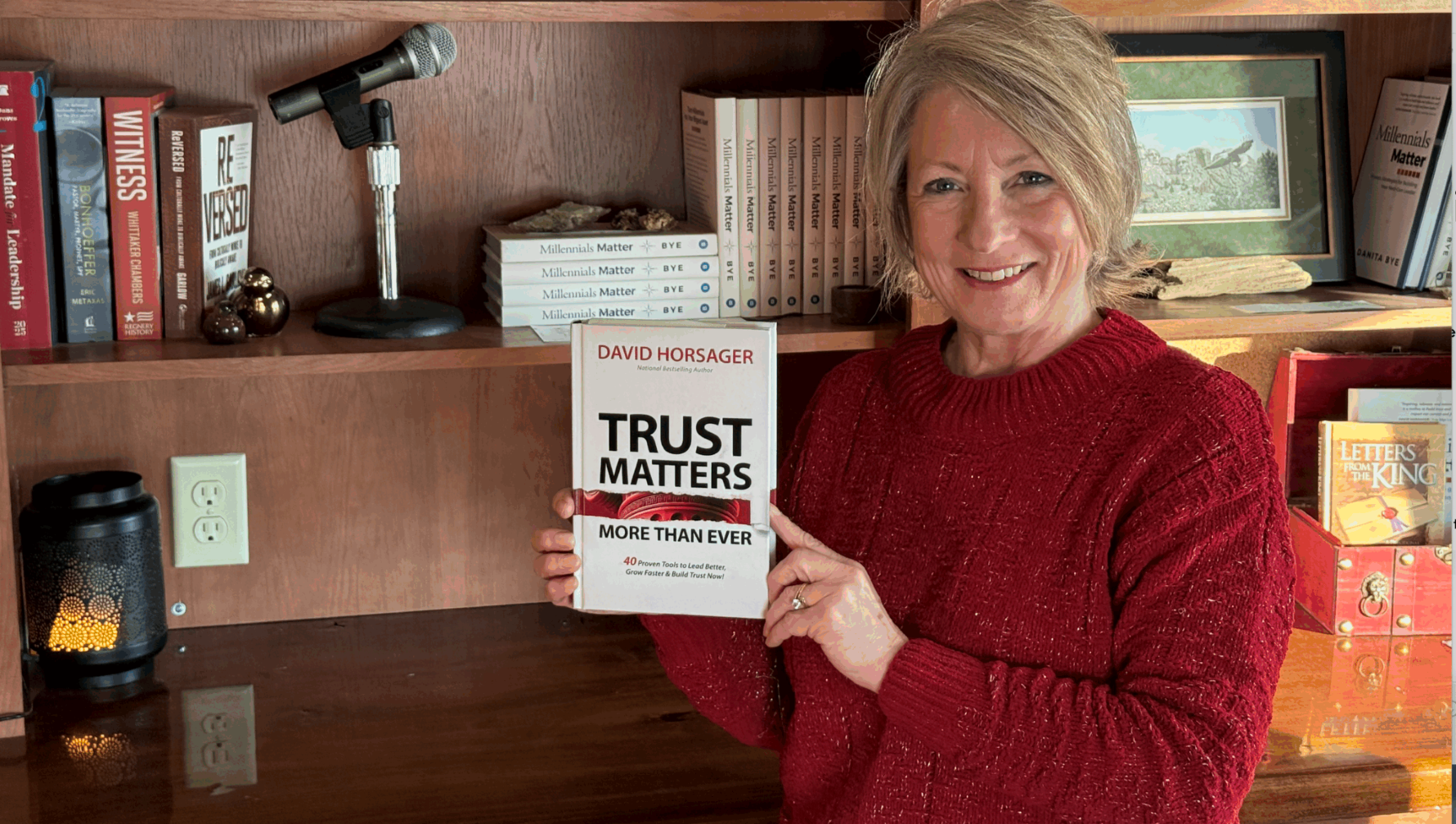
In Trust Matters More Than Ever, David makes the case that trust is no longer a “soft” value. In a world filled with uncertainty and constant change, trust becomes a major advantage. Leaders who build trust move faster, build stronger teams, and create healthier, more resilient cultures.
In the Age of AI, where deepfakes, misinformation, and digital shortcuts can easily erode credibility, trustworthiness becomes not only a leadership virtue but also a competitive advantage. It is your leadership currency
Why Leaders Need to Model Trust
We’ve all seen what happens when leaders spend that currency poorly.
A leader might set high expectations but cut corners when it’s convenient. Their public message doesn’t match their private behavior. Sometimes these failures make headlines; other times they stay hidden. Either way, trust is lost. And when trust is depleted, influence soon follows.
In the age of AI, technology can blur reality and tempt leaders to take shortcuts. But shortcuts always come at a cost. Trustworthiness is what keeps your leadership account solvent.
In today’s world, being trustworthy is more than just keeping promises—it’s about being real.
No one follows a leader they don’t trust. And no one trusts a leader who sounds fake.
That’s why modeling trust is so important when coaching young leaders. They’re growing up in a culture where results often matter more than presence. They can spot inauthenticity a mile away. If they see you avoiding responsibility or hiding behind polished language, they’ll question whether your leadership is worth investing in.
4 Leadership Strategies to Mentor Trustworthiness
Trustworthiness isn’t something you can simply teach; it’s something you model. Here are 4 ways to help young leaders build trust in today’s AI-shaped culture.
1. Keep Your Commitments – Especially the Small Ones
Trust grows when your words and actions match. Small promises are easy to overlook, but following through on them builds credibility for bigger responsibilities. Returning calls. Showing up on time. Doing what you say you’ll do. These small deposits build a strong trust account.
2. Practice Presence, Not Performance
Young leaders are surrounded by curated images and scripted language. What they need is a leader who is fully present: listening without distraction and engaging without an agenda. When you slow down and ask thoughtful questions, you model trustworthiness that can’t be automated or outsourced.
3. Tell the Truth with Courage and Care
Trust grows when leaders are honest and respectful, even in difficult conversations. Pairing truth with kindness builds credibility and teaches young leaders how to handle tension without sacrificing integrity. Honest leadership creates honest followers.
4. Protect Confidentiality and Resist Gossip Trust grows only where people feel safe. Leaders lose credibility quickly when confidentiality is broken or gossip is tolerated. Rabbi Jonathan Sacks, in Lessons in Leadership, warns that in the Torah, gossip is considered one of the gravest sins: “Gossip kills three people: the one who says it, the one it is said about, and the one who listens.” As a leader or coach, be a safe place. Honor private conversations. Refuse to participate in gossip, even when it feels harmless.
Trust Transfer: How Moses Prepared Joshua for Leadership
There’s a reason trust in leadership is relational, not transactional. Jesus entrusted His disciples with a significant mission, not because they were perfect, but because they were faithful. “Whoever can be trusted with very little can also be trusted with much” (Luke 16:10).
That principle shaped Moses’ relationship with Joshua.
Joshua learned trustworthiness by watching Moses handle pressure and own mistakes. Trust wasn’t taught from a manual—it was transferred through lived example.
You’re in that same mentoring role right now.
The good news is that trustworthiness doesn’t require perfection. Moses showed Joshua that humility and honesty can rebuild trust. When leaders admit mistakes and realign with truth, trust can be restored.
Your Leadership Takeaway
In a world where machines can generate content, only character can generate trust.
And in an AI-driven culture that rewards speed, your steady, faithful presence becomes a powerful witness.
Trustworthiness is built choice by choice—commitment by commitment—conversation by conversation.
And over time, those choices become your most valuable leadership currency.
Your leadership matters—now more than ever.
Leadership Question: Where in your leadership are you being called to choose trustworthiness over what feels quick or convenient?
Leadership Lesson: Leaders can have vision, charisma, or even authority—but if people don’t trust you, they won’t follow you.
Copyright Danita Bye – (Edited by ChatGPT for clarity and flow.)

Let’s discuss a tailor-made interview to meet your audience’s needs.
Virtual speaking event? No problem!
Check out my Speaker page HERE.
To schedule a call, contact me at danita@danitabye.com
Jon Greiner
Posted at h,Excellent points here Danita! AI is a mirror where culture will be reflected, and the fruit of the spirit will shine brighter than ever. A lot of changes are coming to almost every industry, and the people that reflect Christ will shine brighter than ever.
Danita Bye
Posted at h,Thanks, John, for your insights. Yes, changes are coming to almost every industry. And, praying that we not only shine brighter but have supernatural W.I.N.D. (Wisdom, Insight, knowledge, Discernment) to navigate and lead wisely. FYI – Hope to see you at Williston Basin Petroleum Conference in May.