


Is Mentoring Accountability a Key Focus of Your Leadership Strategy in the AI Age? (YouVersion)
As a leadership development guru, I know that accountability is foundational to a high-growth company.
A devotional discussing the importance of accountability. Seems odd, huh? Yet, the topic is included in the original YouVersion Devotional.
This is my original YouVersion Devotional on Accountability. It’s followed by some updated insights based on how much the world has changed with the advent of AI. I trust you find helpful insights in both the original version as well as the updated comments.
 Original YouVersion: Accountability
 Original YouVersion: Accountability
Mentor Accountability
“I can’t help it.” “It was his fault.” “She made me do it.” From elementary school to the corner office, and since the beginning of time with Adam and Eve, these words are and have been spoken by people who avoid accountability. They play the blame game.
One of the qualities I love about Moses is that he often stood in the gap for the people. He acknowledged when they had done wrong, and he acknowledged when he himself had done wrong. Moses modeled accountability for Joshua.
Accountability means having the emotional maturity and internal backbone to take responsibility for one’s own actions and choices, and not shift blame to external factors or people.
It takes both humility and courage to admit that we’re solely responsible for the choices we make, including what we choose to think and feel. In order to become influential, your millennial leader needs to see you navigating your way through rocky situations with a high sense of personal accountability.
Here are insights to mentoring accountability.
Listen honestly to self-talk.
Start developing good accountability skills by honestly discussing the following:
- Do I blame others when I fail or make a mistake?
- Do I blame a situation that occurred in my past?
- Or, do I blame God?
Based on what you discover in your discussion, commit to shifting your mindset and your prayers to improve this character trait.
Focus on positive action instead of reaction. Your young leader doesn’t have to examine their own contributions to a negative situation. They don’t have to accept responsibility for the poor choices they’re making with their life. They don’t have to take ownership of how they’re choosing to think and feel about a situation.
However, by doing so, they build their internal leadership capacity, so that when they’re in a difficult spot, they’ll be able to encourage others to make informed choices.
Search for creative options. Invite your mentee to have a mindset that minimizes excuses and maximizes the search for creative solutions, which is vital during times of chaos, conflict, and evangelizing. We serve the most amazing God – He is always ready to help with creative, innovative options when we cry out to him.
Accountability, paired with a resolve to find creative solutions, yields strong character and fewer challenges to a strong faith in God. It enables us to make discipling leaders who will make discipling leaders.
If you’re ready to build next-gen leaders to maximize your business and realize your leadership legacy, visit danitabye.com.
Scripture
Proverbs 10:17
Proverbs 27:17
Updated Reflections: Is Mentoring Accountability a Key Focus of Your Leadership Strategy?
If we were sitting across from each other right now, I’d probably pause for a moment before saying anything.
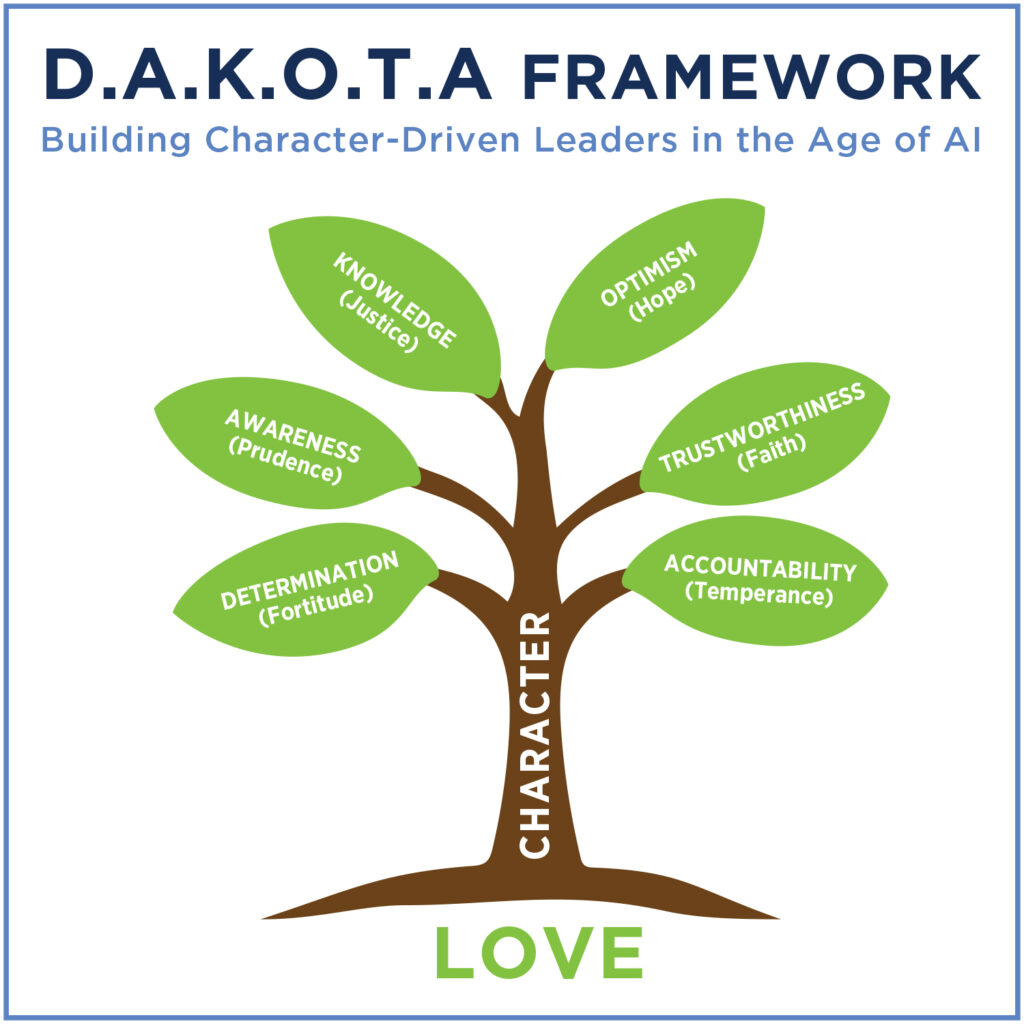
Because accountability is one of those leadership topics that sounds simple—but touches everything.
Over the years, I’ve learned this: accountability isn’t just a leadership skill. It’s the backbone of leadership influence. It’s also why accountability sits as the final letter in the D.A.K.O.T.A. Framework. Not because it’s last in importance—but because without it, everything else eventually unravels.
When accountability is missing, leadership may function for a season. But under pressure, it collapses. When accountability is present, leadership doesn’t just survive change—it grows stronger through it.
What I’ve Observed Over Time
In my work with executive leaders, I’ve had a front-row seat to how accountability shapes—or weakens—organizations. Rarely does a lack of accountability show up as open rebellion. Much more often, it appears as Explanation. Rationalization. Quiet deflection. Sometimes it sounds reasonable. Sometimes it even sounds justified.
But here’s what I’ve noticed again and again: when leaders spend their emotional energy explaining why something didn’t work, they quietly lose the energy needed to make it work.
Accountability redirects that energy. It shifts attention away from who’s at fault and toward what’s possible. And that shift changes cultures—slowly, steadily, and deeply.
The Question That Separates Leaders
I’ve watched leaders interrupt unhealthy patterns by asking their team one simple, courageous question:
“What might you do to solve this problem and get the desired result?”
That question doesn’t deny reality. It doesn’t excuse failure. It doesn’t ignore injustice. But it does return agency to the leader asking it.
That’s where influence begins—not with control, but with ownership.
It’s also why accountability is so closely tied to mentoring.
Why Moses Still Matters
You’ve already reflected on Moses and Joshua in the devotional, so I won’t retell the story. Instead, let me ask you a question I often ask leaders: Who is watching you the way Joshua watched Moses? Not listening to your words—but observing your responses.
Joshua didn’t just inherit leadership from Moses. He absorbed it. He saw how Moses handled pressure, failure, frustration, and responsibility long before he ever held authority himself.
That’s mentoring at its deepest level.
And that’s what accountability does—it teaches without preaching.
Accountability in a Rapidly Changing World
We are leading in a moment of unprecedented acceleration. Technology—especially artificial intelligence—is reshaping how we work, communicate, and make decisions. Systems are faster. Feedback is automated. Outcomes are optimized.
But here’s the truth we can’t afford to forget – technology can’t model responsibility.
Only people can do that. In an AI-shaped world, accountability becomes even more visible. Even more necessary. Even more rare.
Young leaders are watching closely. Many of them grew up surrounded by broken trust—scandals in business, politics, and even the church. As a result, they’re often skeptical of leaders who speak about values but avoid responsibility when it matters most.
That’s why your accountability carries so much weight.
When young leaders see you lead like this, you’re showing them a different way to lead:
-
acknowledge mistakes instead of hiding them,
-
resist the urge to shift blame,
-
and step forward with responsibility even when it costs you,
Accountability Is a Calling, Not a Suggestion
Mentoring accountability isn’t optional if you want to raise leaders of influence. Disciple-making requires responsibility. It means owning your role in shaping people who will, in time, shape others. Accountability keeps leadership aligned—not with ego or image—but with God’s purpose.
This isn’t about perfection. It’s about integrity. Integrity is always lived before it’s taught.
Three Practices That Quietly Form Leaders
You’ve already been introduced to three practical ways to coach accountability. Rather than repeat them, I want to reflect on what they produce over time.
Listening honestly to self-talk develops awareness. Leaders who practice this learn to recognize internal narratives before those narratives harden into excuses. Over time, this builds emotional maturity and humility—two traits every leader needs but few develop intentionally.
Choosing action over reaction builds steadiness. Leaders who pause before responding learn to navigate pressure without being driven by it. They become anchors in uncertainty—people others trust when storms hit.
Searching for creative solutions nurtures hope. When leaders stop asking “Why me?” and start asking “What now?”, innovation opens up. Accountability doesn’t limit imagination—it frees it.
Together, these practices form leaders who don’t shrink from responsibility. They grow into it.
Your Role Today
If you want to raise leaders of influence, anchor your leadership role in accountability. Without it, everything eventually crumbles under pressure. With it, leadership deepens, trust grows, and influence multiplies.
Here’s a simple way to remember what accountability looks like in action:
-
An honest ear tuned to your inner voice
-
A willingness to choose response over reaction
-
A commitment to pursue solutions instead of excuses
These aren’t dramatic moves. They’re quiet, consistent ones. But over time, they shape something powerful.
Your Leadership Takeaway
This completes the D.A.K.O.T.A. Framework journey—but it’s not the end. It’s the beginning.
As you coach determination, awareness, knowing, optimism, trustworthiness, and accountability, you are shaping leaders who will live out their calling with character and courage.
Here’s the ripple effect for you to remember: the leaders you coach today will mentor others tomorrow.
That’s how character multiplies.
That’s how cultures shift.
That’s how nations are influenced.
In this AI era, accountability keeps leadership human. It prepares you for your moment of convergence—when calling, character, and competence align for lasting Kingdom impact.
So stay steady. Stay humble. Stay accountable.
Your leadership matters—now more than ever.
Here is a video I made on Accountability years ago. AI brought many changes to our world, but it can never replace accountability.
Leadership Lesson: Accountability isn’t about blame—it’s about ownership. When you take responsibility, you open the door to growth, innovation, and trust.
Leadership Question: What daily habits could help me strengthen a spirit of accountability in myself and those I mentor?
Copyright Danita Bye – (Edited by ChatGPT for clarity and flow).
su_box title=”Need fresh insights for your next podcast series? ” style=”soft” box_color=”#5c83c2″ title_color=”#262729″ radius=”6″]

Let’s discuss a tailor-made interview to meet your audience’s needs.
Virtual speaking event? No problem!
Check out my Speaker page HERE.
To schedule a call, contact me at danita@danitabye.com[/su_box]
No Comments