
Deep Knowledge Boosts Moral Fiber in the Age of AI (Character Matters)
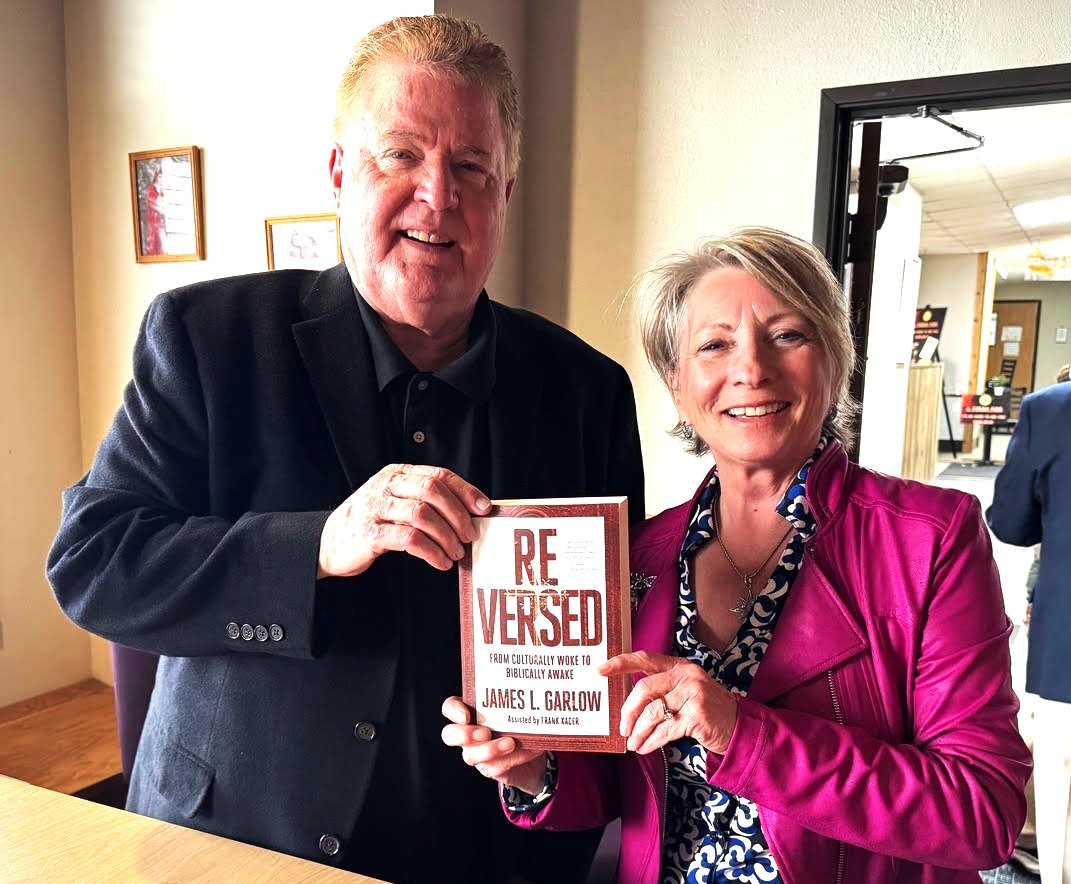
As I’m thinking about leadership in the AI age, I finish reading a book by my friend, Jim Garlow. Reversed: From Culturally Woke to Biblically Awake.
The book ends. But the questions do not.
The ideas stay with me long enough that I write two short reflections exploring leadership and emerging technologies. The first reflection summarizes the great insights on AI that Jim discusses in Reversed.
The second reflection asks a simple question: What is transhumanism, and why should leaders understand it?

Westin Bye, my son, who is the inspiration to Millennials Matter, with Cooper Buss.
Around that same time, my friend Cooper Buss, a Millennials Matter reviewer, shares a reflection that brings clarity. One line stands out: “The fear is real, not of a physical threat, but of the destruction of our humanity.”
He describes the danger of slowly outsourcing our thinking to machines and mechanizing something sacred: our intellect, our creative and moral reasoning, and our identity as image-bearers of God.
That insight sharpens a concern I hear often when speaking with strategic leaders. Technology can process information, yet it cannot form conscience. Systems can generate answers, yet they cannot teach discernment. Knowledge can inform decisions, yet it cannot build moral fiber unless it goes deeper than data.
The discomfort comes from recognizing that the greatest risk is not technical. It is moral. The failure of moral leadership.
Are we forming leaders who know what is right? And do they dare to choose the right path when pressure comes?
The updated excerpt you are about to read from Millennials Matter addresses that very question. It explores how knowledge, when grounded in virtue and practiced daily, strengthens the moral fiber leaders need to stand firm.
As you read, consider your own leadership. Not just what you know, but how your knowledge and your wisdom are shaping your character.
Because the leaders who endure are not the ones who know the most, there is no moral confusion — they know what truly matters.
Millennials Matter Chapter 5: Knowledge: Deep Knowing Boosts Moral Fiber
“It’s really a war of good against evil,” the speaker said.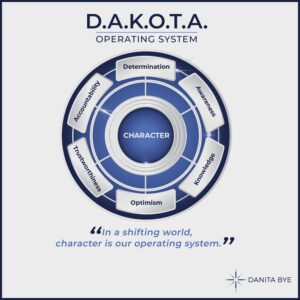
I was at a packed house for the Leadership ND Cyber Security Summit with key business, education, health, and government leaders. The keynote speaker’s words caused me to shift uneasily in my chair. I was uncomfortable because I was painfully aware of the risks of cyber-attacks on our business integrity and national security. When the keynote speaker said, “It’s really a war of good against evil,” a chill ran up and down my spine.
As industry, business, and educational leaders, we concur that for the health and vitality of our nation, our businesses, and our families, we need to invest in raising future leaders with strong moral fiber.
We need to raise leaders who know what’s right and what is wrong and who dare to stand up for what is right over what is easy.
Millennials and Knowing What Is Right
What are you seeing in the moral fiber of your next-gen leader? Do you see the courage to stand up for what is right over what is easy? Before answering, consider some of the following major events that happened during the formative years of this generation:
-Corporate corruption scandals, such as Enron and WorldCom
-Tragic events, like the massacre at Columbine High School in Colorado
-Rising education costs with high student loan debt
-Terrorist attacks around the globe
How did events like these impact the generation of emerging leaders? Many say millennials are more aware of the value of family and the brevity of life. On 9/11, our youngest millennials were in preschool, and our oldest ones were twenty-one years old. That means that the majority of millennials will forever remember this tragic moment in our nation’s history. This, plus other global tragedies broadcast on news stations 24/7, left a mark on young minds during critical formative years when they learned to define what is right and what is wrong.
Many parents of millennials reacted to the events of the world with fear. They doubled down and dug into their careers to ensure their children a better future. Some of us, due to the pressure and stress, inadvertently delegated character development and the strengthening of moral fiber to others. Lack of knowing can prevent it.
Tedi Anne Hasapopoulos, Business Ethics Professor at Bethel University in St. Paul, Minnesota, teaches Millennials in her college classroom. Her perspective is insightful in helping us think through how to encourage our Next-Gen leaders in developing the deep knowing that boosts moral fiber. When asked to describe the challenge before us, this is what Professor Hasapopoulos had to say:
“As I think about how I teach ethics to Millennials, I talk to them about the values foundation on which they set their moral footing. How wide, deep, and long is it? What kind of material does it consist of? Is it the size and thickness of a postage stamp or as wide and deep as a foundation block? Is it solid granite or shifting sand? Our values are the basis on which we make moral decisions. Unless our values are grounded in something solid, we will stumble when pushed by ethical adversity. That’s why so many people experience moral failure. It is not because they are awful people. It is because they were too easily pushed over.
So, how does a person build a wide, long, and deep foundation made of something solid to stand upon when ethical decisions are to be made? Aristotle said to habitually practice the cardinal virtues of prudence, justice, temperance, and courage. If we practice these consistently in everyday life, then they become the ‘go to’ position when ethical pressure exerts its negative force. Don’t wait until you need virtue to develop virtue; it’s too late by then.
How does one develop virtue? That is where the three Christian virtues enter the picture. We also develop the capacity of deeper faith, greater hope, and a more expansive love.
For Christians, all these virtues are developed in three major ways. First, we allow God’s Word to instruct us as to what is virtuous. Second, we allow the exemplar of Jesus to demonstrate virtue in action. Third, we open ourselves to the directing of the Holy Spirit to develop the ‘fruit’ of love, joy, patience, kindness, gentleness, faithfulness, moral goodness, and self-control. (Galatians 5:22-23)
Virtue is solidified by practice. We do what the Bible instructs, what Jesus did, and what the Holy Spirit directs us toward, even in the little things that seem to have minimal moral consequences. In doing so, we build up our moral muscle in preparation for standing against moral decisions that can bring significant harm.”
How to Boost Moral Fiber in Your Young Leader
Professor Hasapopoulos’ foundation-footings imagery is helpful for us as we talk about ethics, which is often a sensitive topic where we can get branded as old school or out of touch with today’s culture.
-What are the facts? Discernment in a difficult situation requires examination of all the relevant facts. Fear or other intense emotions cloud the facts. Invite your mentee to put on their investigator’s hat and do the following:
-gather information by asking who, what, where, when, why, and how questions;
– talk to all the stakeholders to get a broader and deeper understanding of the situation; and
-listen for emotion in others, which may cloud their perception of the facts as they remember.
What is the ethical dilemma? Sometimes what we call an ethical dilemma is really just a personal choice or preference that is different from our own. In a culture of moral relativism, it can be difficult to determine what actions are within the scope of personal preferences and which are in conflict with ancient virtues. Guide your future leader through ethical dilemmas until you are confident in their standing. This can be hard work, but it is important work for a young leader to do.
What are the alternatives? Sometimes people get stuck thinking that the only way to solve a problem is to do it by compromising their ethics. However, when we start brainstorming options on how to solve the problem, we’ll often develop a whole cadre of options along the ethical scale. Many of these will be more aligned with our values and character. Others will be ruled out because they don’t support virtuous leadership. Work with your mentee to recognize and act on ethics-based alternatives to problem-solving.
What are the possible consequences? When wrestling with options, it’s a good test to consider the results—what would happen after a particular action. Recognizing the intended and unintended consequences of a dilemma can help inform a wiser course of action. Urge your leader to consider results and unintended consequences prior to making decisions.
What are some questions that you would invite your mentee to consider adding to their ethical guideline list?
Are you acting responsibly? Responsible is defined as being able to act without supervision. Knowing what is right and doing what is right aren’t always easy. There are a multitude of mini decisions that inform any decision. Theological ethicist H. Richard Niebuhr taught that responsible people have three qualities: they initiate action, respond to situations, and are accountable.
Teach your up-and-coming leader to model these qualities to ensure they will continually gain ground through their responsibility.”
Updated Reflection: Knowledge, Justice, and Discernment in an AI Age
After finishing Jim Garlow’s book Reversed, I found myself thinking again about the ideas in this chapter from Millennials Matter. Both conversations point to the same leadership challenge: knowing what truly matters in a world overflowing with information – it’s discernment vs data.
Artificial intelligence has accelerated the volume of information surrounding you. Much of what fills your inbox, your social feeds, and even the news cycle is now machine-generated. The pace is fast and the volume constant. Discernment often feels harder than it used to.
The challenge for you as a leader is not a lack of information. The challenge is knowing what is true, what is worthy, and what deserves your attention. Knowledge becomes your moral compass, not quick knowledge, but deep knowing formed slowly, tested under pressure, and grounded in virtue.
Philippians 4:8 continues to guide my thinking in this season: whatever is true, whatever is noble, whatever is  right, whatever is pure, whatever is admirable. Those words are not becoming easier to live out. They are becoming more demanding.
Deep knowing slows you down long enough to examine facts, recognize ethical tension, consider consequences, and act responsibly. This kind of knowing strengthens moral fiber and prepares you to lead with clarity when decisions carry real weight.
Virtue and Vice – The Quiet Battle for Deep Knowing
Justice depends on this kind of knowing.
Justice is one of the cardinal virtues and sits at the center of character-based leadership. Justice is not about winning arguments or proving a point. It is about acting fairly, choosing integrity, and doing what is right when pressure, power, or convenience tempt you to compromise. Knowledge, when anchored in virtue, supports justice by helping you see clearly before you act.
The opposing vices are subtle. They appear when speed replaces reflection and convenience overrides responsibility. They take root when leaders stop wrestling with difficult decisions and allow systems, trends, or fear to decide for them. None of this feels dangerous in the moment, yet over time, it weakens moral clarity.
Artificial intelligence does not remove your responsibility as a leader. It heightens it.
This season calls you to become more thoughtful, more discerning, and more grounded in virtue.
Summary
Knowledge that goes deeper than data prepares you to lead justly in a noisy world.
Technology can process information, but it cannot form conscience. Artificial intelligence can accelerate decisions, but it cannot discern what is right. That responsibility still belongs to you.
Knowledge helps you see clearly. Character ensures you act on what you see.
Deep knowing allows you to discern the difference between what is convenient and what is right and to choose wisely even when no one is watching.
Leadership Lesson: Deep knowing strengthens moral fiber when leaders choose discernment, justice, and responsibility over speed and convenience.
Leadership Question: Where do you need to slow down and deepen your knowing before your next important decision?
© Danita Bye. Developed with AI assistance to enhance clarity and flow. Worked with Hemingway for readability.
PS: The author of Reversed, Jim Garlow, also wrote Well Versed. You might want to check it out.
PPS: Mark Hagerott, the leader I heard speak at a leadership conference, is currently writing a book for the Navy on Minds versus machines. I’ll keep you posted on progress.
su_box title=”Need fresh insights for your next podcast series? ” style=”soft” box_color=”#5c83c2″ title_color=”#262729″ radius=”6″]

Let’s discuss a tailor-made interview to meet your audience’s needs.
Virtual speaking event? No problem!
Check out my Speaker page HERE.
To schedule a call, contact me at danita@danitabye.com[/su_box]
No Comments