
The Question That Boosts Your Leadership Influence in the Age of AI
At the beginning of each new year, I find myself doing a leadership development exercise: I look back at a few favorite books and ask, “Should I re-read any of these?” Not because I’ve forgotten the content, but because certain books have a way of re-centering my thinking when the world feels noisy.
One of those books for me is QBQ! The Question Behind the Question by John G. Miller.
Even though I first read QBQ years ago, I’d argue it’s more relevant today than ever—especially in this age of AI disruption, exponential change, and the growing sense that many leaders are losing their footing.
TrailRider – A story from 1999
Let me take you back to 1999.
My husband, Gordon, and I had just sold a company we helped found: Micro-Tech Hearing Instruments. If you’ve ever built something from scratch—a business, a team, a mission—and you’ve poured your heart, soul, and energy into it, you know the odd emotional experience I’m about to describe.
Selling that company felt like selling one of my children. It was exciting, yes—but also disorienting. I call it my “lost entrepreneurial stage”.
I floundered and began asking, “What’s next?” We knew we didn’t want to move to the Twin Cities. We wanted to stay in St. Cloud, so we began searching for another business opportunity that would keep us rooted where we were.
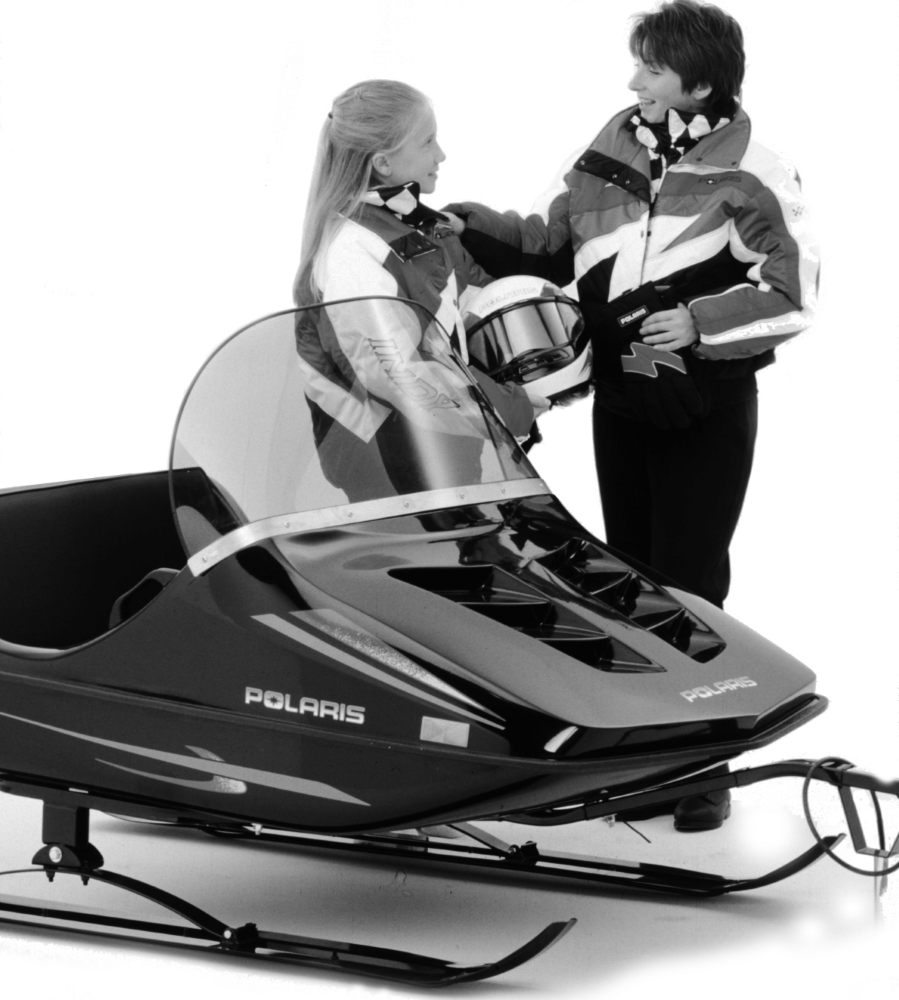
That search led us to purchase TrailRider, which manufactured snowmobile tow-behind trailers for hauling your family on the trails.
Immediate problem – I got involved…and I absolutely hated it.
- It had engineering requirements that were not my strength.
- It involved snowmobiles, which I wasn’t passionate about.
- It involved snow, which I really don’t love.
- It simply didn’t fit my wiring, my calling, or my joy.
Then, to make it worse, El Niño hit that year, and there was no snow. Customers weren’t buying. The business struggled. Everything felt like pushing a boulder uphill.
That’s when I fell into a cycle I didn’t recognize at first:
I complained.
I complained about Gordon because I felt like he had persuaded me into something I didn’t want.
I complained about customers because they weren’t buying.
And if I’m being completely truthful… I was also frustrated with God. Wasn’t he in charge of the snow? 🤗
In hindsight, it’s easy to see what was happening.
I was stuck in a blame mindset.
“What” changed everything
Then someone handed me: QBQ! The Question Behind the Question. It challenged me to my core.
The first principle that leaped off the page for me was the difference between WHY and WHAT.
I had been living in “Why me?” thinking. But QBQ helped me see something powerful:
- “Why” creates defensiveness.
- “What” invites forward action.
Even today, I believe that’s true whether we’re asking questions about ourselves or asking questions of other people.
The word “what” mattered for me personally because one of my StrengthsFinder strengths is Activator. “What” shifted me from spinning…to doing.
Instead of “Why is this happening?” the question became:
- What might I do next?
- What responsibility can I take?
- What action would move this forward?
That single mental shift changed the trajectory of this situation.
 I pulled Gordon together for a whiteboarding session. We brainstormed ten options for what we could do to make a go of the Trail Rider business. One of those ten options was: sell the business.
After evaluating our options, that ended up being the best path forward. We placed advertising and sold the business within 6 weeks. Within 6 weeks! Here I had wasted all this time complaining, grumbling, spinning…when the problem was solved in only 6 weeks.
The “Why” Trap
Here’s what I’ve learned since then: it’s not just young or inexperienced leaders who get stuck in the blame cycle.
Even seasoned executives—leaders with long histories of success—can fall into it too. Especially when:
- Pressure and relentless change become overwhelming.
- The marketplace shifts faster than strategy can keep up.
- Uncertainty is crushing from every direction
That describes the world you’re leading in right now.
AI is transforming entire industries and the nature of leadership itself. Routine and predictable work is being automated. Even successful leaders are asking new questions:
- How do I stay relevant?
- How do I lead people through uncertainty?
- What do I do when the rules keep changing?
QBQ, a Character Mandate leadership tool
This is where QBQ connects deeply to my current work on Character Mandate: Winning Strategies for Leading in the AI Revolution.
In the Age of AI, it’s tempting to outsource not only tasks, but responsibility. AI can produce content in seconds. It can generate strategy ideas, analyze trends, and summarize complex topics. But AI cannot do the most essential work of leadership:
- owning decisions
- building trust
- showing courage
- acting with integrity
- leading people through fear and fatigue
- staying anchored in values when everything feels unstable
That work requires character.
Character is not just a personal virtue. It’s a leadership strategy.
When leaders are overwhelmed, the first thing that often erodes isn’t talent. It’s accountability. It’s emotional steadiness. It’s the ability to respond instead of reacting.
That’s why QBQ! isn’t just a business tool. It’s a character tool.
It forces the leader back into the mirror. Instead of asking, “Why are they doing this to me?” QBQ calls us to ask: What can I do to lead well in this moment?
QBQ aligns with D.A.K.O.T.A. Leadership
QBQ also aligns beautifully with my D.A.K.O.T.A. framework because asking “What” is an act of:
- Determination

- Awareness
- Knowledge
- Optimism
- Trustworthiness
- Accountability

It moves us from victim thinking to leadership thinking. In volatile times, that shift is priceless.
When leaders consistently choose “What” over “Why,” they don’t just create better outcomes—they become steadier people. That is what teams are craving in the Age of AI.
3 Action Steps for Executive Leaders
Let me leave you with three executive-level action steps you can apply immediately. These are simple, but don’t underestimate them. They are powerful.
Action Step #1: Replace “Why?” with “What now?”
In moments of pressure, try this reset:
- What is within my control?
- What needs to be decided?
- What is the next best step?
This shift reduces anxiety and restores agency.
Action Step #2: Build a “What Culture” on your team
In meetings, you’ll hear blame language. It may sound like:
- “Why can’t they…?”
- “Why don’t we ever…?”
- “Why is leadership doing this…?”
When you hear it, pause and gently redirect:
- What outcome do we want?
- What would progress look like?
- What can we do about it?
QBQ doesn’t dismiss frustration—it channels it into responsibility.
Action Step #3: Use AI as a tool, but keep accountability human
AI can help you move faster. But it cannot carry moral responsibility.
So before delegating to AI, ask:
- What decision must I personally own?
- What values must guide this outcome?
- What impact will this have on people?
In the Age of AI, leadership must remain deeply human, and that begins with character.
A Leadership Choice
As I re-read QBQ at the start of the year, I’m reminded of something I still believe – the quality of your leadership rises or falls on the quality of your questions.
The question that continues to shape my life is still this simple: What might I do to get a positive result?
Underneath every disruption, every disappointment, and every season of change…there’s a deeper choice:
- Will I live in blame?
- Or, will I live in responsibility?
In the Age of AI, where change is constant, and clarity can feel rare, this choice is essential.
Your character matters. Your accountability matters.
The questions you ask—especially the ones you ask yourself—matter more than ever.
More leadership principles based on Trail Rider:
Danita Bye | Leadership Development Tips to Fight Finger Pointing
Danita Bye | One Question that Improves Millennials’ Responsibility Factor – Part 1
© Copyright Danita Bye – (Edited by ChatGPT for clarity and flow).

Let’s discuss a tailor-made interview to meet your audience’s needs.
Virtual speaking event? No problem!
Check out my Speaker page HERE.
To schedule a call, contact me at danita@danitabye.com
No Comments