
Trustworthiness: Leading with Compelling Integrity in the AI Age
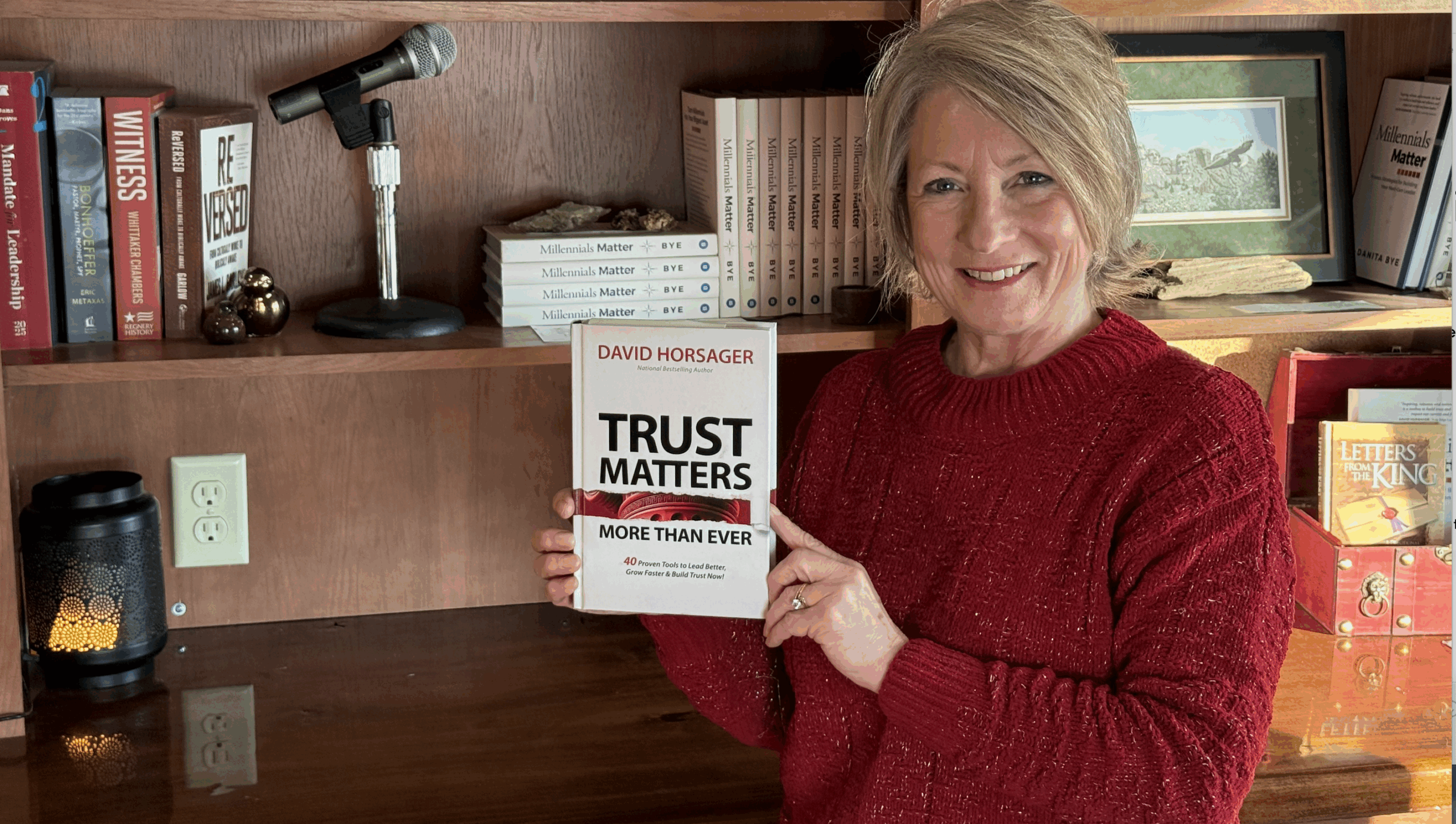
“The lack of trust is your biggest expense,” says David Horsager, author of The Trust Edge. We all agree, don’t we, that trust is easy to lose and hard to rebuild — especially under pressure in the Age of AI.
I watched it unfold in a boardroom.
A senior executive’s future was on the table. Board members held strong opinions. Some wanted her out immediately. Others believed she was performing well and should stay. Emotions ran high. Pressure mounted for a quick decision.
I was confused.
There was no documented ethical failure. No clear pattern of incompetence. The case being made rested on private frustration and political maneuvering. It seemed like urgency was being used in order to cover something. Have you been in that situation before? Your gut tells you that you’re not getting the full story?
I asked a simple question. “Has anyone spoken with her directly about these concerns?”
Silence.
Then quietly: “No.”
These are experienced leaders! And no one had extended the basic dignity of a direct conversation with another colleague! I was shocked.
That moment shifted the boardroom. The concern was no longer just about her performance. It was about ours.
When leaders maneuver, trust weakens long before any decision is made.
In the end, the board chose the right path. Concerns were addressed directly. Expectations were clarified. The transition that followed honored both the individual and the organization.
That experience reminded me of something I wrote about in Millennials Matter — long before AI made it harder to slow down long enough to see it.
Technology can help us move faster. It cannot help us become trustworthy.
You can automate efficiency. You cannot automate integrity. Trustworthiness remains a leader’s greatest edge.
What we are experiencing today only magnifies a timeless leadership reality. The chapter on Trustworthiness: Leading with Compelling Integrity in Millennials Matter addressed this erosion long before speed made it harder to see.
Updated and expanded excerpt from Millennials Matter, Chapter 7
Trustworthiness: Leading with Compelling Integrity
“How much do you value trustworthiness?
My go-to expert on this topic is David Horsager, a speaker and best-selling author. I know David personally. He truly embodies his message. A key insight from his book, The Trust Edge, stands out: “The single uniqueness of the greatest leaders and organizations of all time is trust.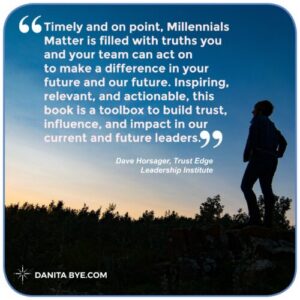
Sometimes, prominent leaders set high standards but fail to be trustworthy when facing ethical challenges. Some of these incidents make the news, while others happen quietly behind the scenes.
David makes a strong case for trust in our lives. Here’s a summary of insights from The Trust Edge and his articles:
- Trust, or lack of it, can accelerate or destroy any business or relationship.
- People follow trusted leaders and buy from trusted salespeople. For a trusted brand, customers will pay more and recommend it to others.
- A key driver of trust is the belief that someone cares about the greater good. Firefighters and nurses naturally care for others, but we often question if a salesperson has our best interests at heart.
- Don’t let your industry’s reputation affect you. Choose to be among the trusted in your field.
Growing a Trustworthy Character in Your Young Leader
Albert Einstein said, “Whoever is careless with the truth in small matters cannot be trusted with important matters.” So, how can you help upcoming leaders grow their leadership skills and value?
Conduct a Trusted Advisor Survey
When coaching salespeople, I teach them to be trusted resources instead of just annoying salespeople. I share characteristics of a trusted resource, adapted from The Trusted Advisor by Maister, Green, and Galford, and ask them to rate themselves on a scale of 1 to 10:
Trusted People…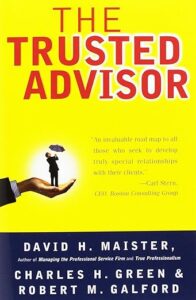
- Are consistent and dependable.
- Tell the truth.
- Have our best interests at heart.
- Act honorably in words and actions.
- Are genuine, not just acting a role.
- Allow us to think and not just provide conclusions.
- Challenge our assumptions to help us see the truth.
- Are motivated to do the right thing.
- Seek new ways to be of service.
- Commit to doing the right thing.
Grow Leadership Influence
You can also use David Horsager’s model as a guide for coaching and mentoring on trust, using the 1-to-10 survey. The eight pillars are clarity, compassion, character, contribution, competency, connection, commitment, and consistency.
Both leadership and sales teams are dedicated to helping others solve problems. Teaching next-gen leaders the long-term value of trust is vital. Trust cannot be built overnight; it takes time and consistent actions. We live in a broken world where lies and dishonesty exist. This reality will affect our next generation of leaders, just as it did ours. As experienced leaders, we must model trustworthiness and teach them to be trusted resources for clients and colleagues. Trustworthiness is earned over time by aligning our actions with our words. This alignment shows we are worthy of others’ trust, especially in moral and ethical challenges. Trust is built on justice, fortitude, temperance, and love.”
Leadership Reflection: Why Trust Matters Now
Trust rarely breaks because of a dramatic failure. More often, it weakens quietly — through the small decisions made around a decision.
That is what happened in that boardroom. No scandal. No proven incompetence. What drifted was the process. Private conversations replaced direct ones. Assumptions replaced facts. Urgency became a reason to avoid the harder conversation.
That is where discernment in leadership slips. Not in the headline moment. In the quiet ones, no one is watching.
Trustworthy leaders catch the drift early. They protect alignment between their words, decisions, and actions before a crisis forces the issue.
The Quiet Leadership Drift from Virtue to Vice

Vice rarely shows up clearly labeled. It disguises itself.
Avoidance looks like patience. Gossip sounds like concern. Protecting position feels necessary. Each step seems small. Over time, those distortions reshape a culture. Suspicion replaces confidence. People stop serving the mission and start protecting themselves.
Vice grows quietly where courage goes missing.
Trustworthy leaders move differently. They choose direct conversation over speculation. They clarify expectations before passing judgment. What they decide privately matches what they declare publicly. They hold to integrity even when tension rises.
Trust is not built through strong statements. It is built through consistent behavior — especially when no one is watching.
Summary: Character Builds Trust
The challenge sharpens in the Age of AI. Technology can accelerate decisions, optimize language, and simulate confidence. It can predict behavior with remarkable accuracy.
What it cannot supply is moral courage.
Technology cannot:
- replace discernment
- create integrity
- extend human dignity
David Horsager has spent his career documenting what the strongest leaders share. The answer is not strategy or skill. It is trust. When trust is present, relationships hold, collaboration moves, and influence grows. When it weakens, even sound strategies stall.
That is what the boardroom revealed. Trust weakened — not because of incompetence, but because leaders chose the easier path when the harder one was required.
AI may calculate outcomes. Only character earns trust.
Leadership Lesson: Trustworthiness is revealed when leaders align their words, decisions, and actions, especially when pressure tempts them to avoid direct accountability.
Leadership Question: Where might I be allowing assumptions or side conversations to replace the courage of direct dialogue?
© Danita Bye. Worked with AI to enhance clarity and Hemingway for readability.

Let’s discuss a tailor-made interview to meet your audience’s needs.
Virtual speaking event? No problem!
Check out my Speaker page HERE.
To schedule a call, contact me at danita@danitabye.com
No Comments