
Accountability Begins with Commitment: In the AI Age, Carry a Round Tuit (Character Matters Series)
Accountability begins long before something goes wrong. This is still true, even more so, in the Age of AI.
I see that clearly during a strategy call about an upcoming launch. A new leader has stepped into a development role. In front of him sit two lists with ninety-three key contacts. The goal is simple: personally connect with each one before the kickoff event.
The lists have been sitting there for twenty-eight days. During the conversation, he says confidently, “I’ll get them all contacted in two days.” The statement sounds strong, decisive, and optimistic.
It also sounds like, “I’ll get a Round Tuit.” (More about the Round Tuit later.)
Problem: The math doesn’t support the promise.
One afternoon is already filled with meetings. Another is blocked with transition conversations. Even if ninety-three emails are sent, that does not equal ninety-three meaningful connections. Sending a message is not the same as building a relationship.
In that moment, the issue is not effort. It is definition. What does contacted actually mean?
What does done require?
Accountability begins with commitment. It begins when a leader defines success clearly before declaring it publicly.
Here is a video I made on Accountability years ago. Technology in the age of AI accelerates expectations, but it does not redefine responsibility.
Strong leaders do not make promises based on energy. They make commitments based on capacity. When words move faster than reality, trust begins to thin. Accountability protects that gap.
It forces character-based leaders to measure before they announce, calculate before they commit, and clarify before they promise.
Once a commitment is spoken, it shapes expectations. Expectations shape credibility.
The following updated excerpt from Millennials Matter addresses accountability at its core.
Updated and expanded excerpt from Millennials Matter, Chapter 8
Accountability: Complete Answerability Counts
“I can’t help it.”
“It was his fault.”
“She made me do it.”
From elementary school to the corner office, these words are spoken by people who don’t want to take responsibility. Victim mode does not go far with me, nor with any other experienced leader I know.
In my work, I help company presidents and CEOs improve their sales teams’ productivity. It is not uncommon for me to step in and deal with blame-gaming toxicity. It is like a cancer. The list of who or what to blame is endless. I hear about the uncooperative economy, the tight marketplace, the stiff competition, the incompetent colleague, and the bad boss. I hear internal blame directed at the marketing department or the production team. I also find that people who tend to pass blame do so out of years of habit.
There’s no way a company, a team, or an individual can have full access to their innovation and productivity when they aren’t taking personal responsibility for their actions and behaviors. In contrast, up-and-coming leaders who are accountable will ask, “What might I do to help solve the problem?” Excuse-busting questions like this, when used over time, develop both high individual performance as well as a positive, energizing culture.
Accountability is having the emotional maturity and internal backbone to take responsibility for your own actions and choices, rather than shifting blame to external factors. In a time of moral confusion, it is an expression of the virtues of fortitude, prudence, justice, temperance, and faith.
Fostering Accountability in Your Young Leader
In The Advantage, Patrick Lencioni shares this powerful truth about accountability: “To hold someone accountable is to care about them enough to risk having them blame you for pointing out their deficiencies.”
In some circles, accountability has become a secret word for “find someone to blame.” We like to talk about how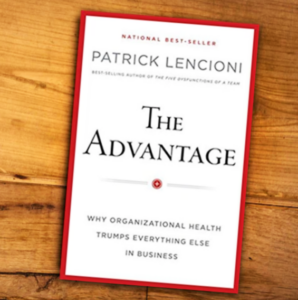 “someone should be held accountable for this.” However, a truly accountable leader will find creative solutions to minimize the damage and to fix the problem.
Humility and confidence to acknowledge that we are solely responsible for the choices we make in our life, as well as what we choose to think and feel, is often counter-cultural. Yet, it is worth modeling for emerging leaders. If they don’t see you navigate your way through sticky situations, they won’t learn from it. In watching you, young leaders experience personal and professional growth, propelling them forward in the leadership journey.
Lencioni’s perspective gives us fresh insight into our own leadership and mentoring roles, as well as how to guide others.
When coaching and investing in your leader, these tips will help them grow in their accountability quotient.
Listen Critically
Suggest they listen to their own self-talk with honesty. Are they shifting blame when they have made a mistake or have performed poorly? When are they choosing to blame others? Do they have someone who is their GoTo option for blaming? Or is it a situation that occurred in their past that is the culprit? What are the patterns? We all go through times when it feels easier to blame someone or something, rather than exercise our personal choice to act, versus just react. The best place to start developing good accountability skills is to be honest with yourself.
I find that often my instinctive reaction is to externalize. Then, after I reflect on the situation for one or two days, and my emotions subside, I begin to see what I might be able to do differently to get a more favorable outcome. This will be hard introspective work for your mentee. You can be a supportive guide along the way. As you work together with our mentee, you may be surprised that you discover some hidden excuses-of-choice of your own. Admit them. Then, commit to shifting your mindset.
Learn the Serenity Prayer

Your leader may not be familiar with the famous and often-quoted Serenity Prayer. It reminds us of what we are accountable for.
Share stories about when you’ve had to shift gears and take a wiser stance.
“God, grant me the serenity to accept the things I cannot change, courage to change the things I can,
And wisdom to know the difference.”
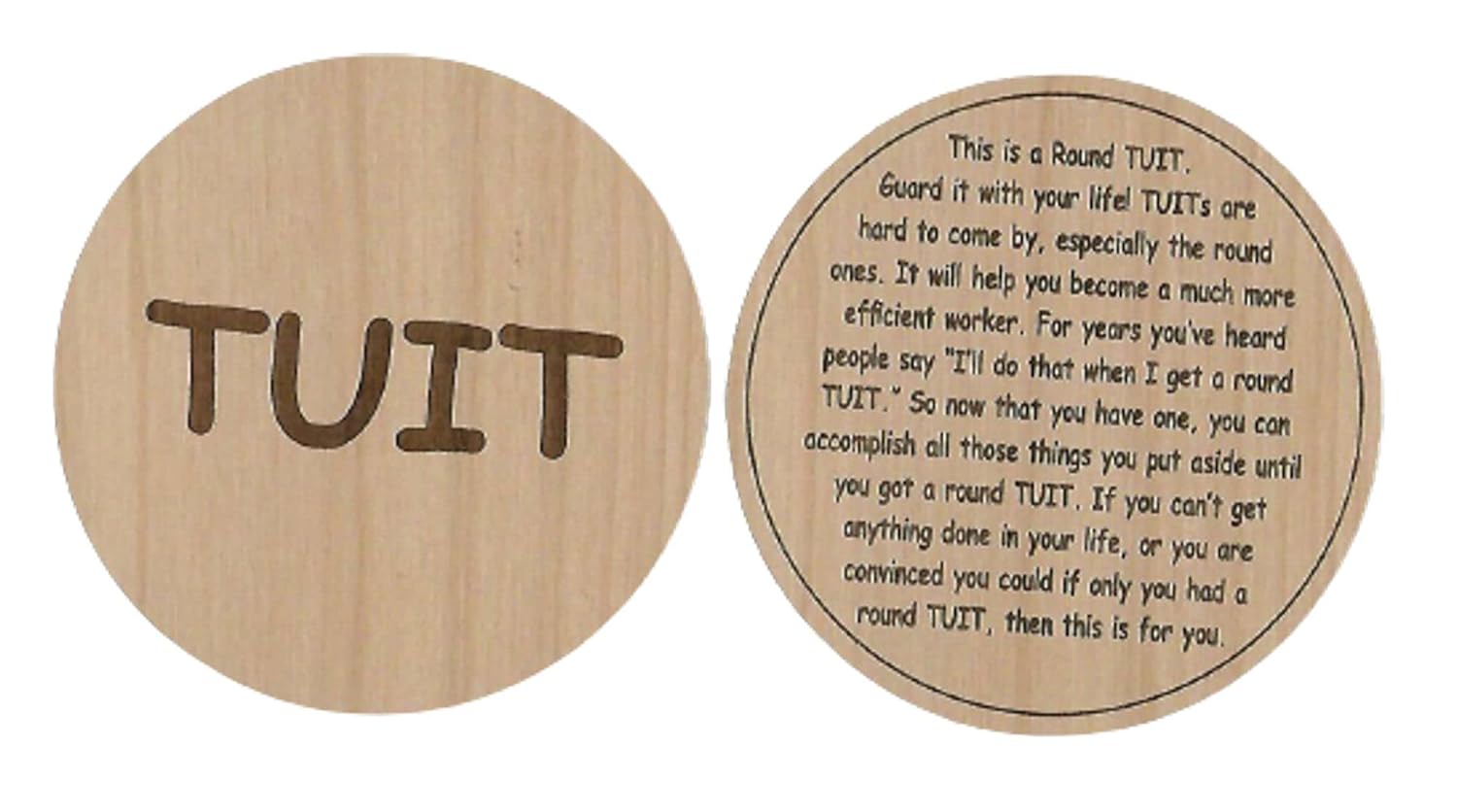
Carry a Round TUIT.
Have you ever carried one of these in your pocket or purse when you were growing up? I think my parents gave it to me as a gift when I was a teenager– I evidently had been getting my regular chores done. This was inscribed on my Round TUIT: This is a Tuit. Guard it with your life as Tuits are very hard to come by, especially the round ones. This is an indispensable item. It will help you become a more efficient worker. For years, we have heard people say, “I’ll do it as soon as I get a round tuit.” Now that you have one, you can accomplish all those things that you put aside until you got a Round Tuit.”
And it has been a great gift; it’s a reminder to hold myself accountable to my commitments. Perhaps your leader needs this gift also.
Focus on Positive Action vs. Reaction
As a young salesperson, I posted this quote everywhere, on my bathroom mirror, inside my planner, in my briefcase, and by my nightstand: “What you do when you don’t have to, will determine what you will do when you can’t help it.” This is about accountability, isn’t it?
Your next-gen leader doesn’t have to examine their own contributions to a situation. They don’t have to accept responsibility for the choices they are making with their life. They don’t have to take ownership of how they are choosing to think and feel about a situation. However, their choices build their internal leadership capacity so that when they are in a difficult spot, they will be able to encourage others to choose well. You are in a privileged role to work with your young leader to help them step out in this area.
Leadership Reflection: Accountability Begins Before the Promise
When I first wrote about accountability in Millennials Matter, I focused on the refusal to blame. That still matters. Leaders who shift responsibility weaken trust.
Today I see something deeper. Accountability does not begin when something goes wrong. It begins the moment a commitment is made.
In the launch event story, the issue was not effort. It was definition. 93 Emails do not equal 93 meaningful conversations. The gap was not motivation; it was clarity. Accountability Begins Before the Promise.
Strong leaders define success before they promise delivery. They measure capacity, define outcomes, and align their calendar with their commitments.
Many leadership failures are not failures of character in crisis. They are failures of clarity at the start. A promise made without calculation weakens credibility long before a deadline arrives. Accountability begins when leaders pause long enough to ask:
- What does “done” actually mean?
- How much time will this require?
- What trade-offs must be made to deliver it well?
Temperance and the Vice of Excess
A virtue must guard leadership responsibility. For accountability, that virtue is temperance.
Temperance is disciplined judgment. It is the pause that helps leaders measure reality before making a promise.
It asks a simple question: What can I responsibly commit to deliver?
Without that pause, enthusiasm easily outruns capacity.
The competing vice is excess. It appears as overpromising, an exaggeration, or unchecked optimism. These habits often sound ambitious, but they slowly erode credibility. They appear in familiar ways:
- Ambition without discipline weakens credibility.
- Ego tempts leaders to impress instead of assess.
- Avoidance delays honest conversations when capacity is already stretched.
- When leaders speak faster than reality allows, trust begins to thin.
Summary: The Pause Before the Promise
Temperance is the pause before the promise. It is the discipline to calculate before committing and the courage to say, “Here is what I can realistically deliver.”
The launch event story revealed how easily enthusiasm can outrun clarity. 93 emails sounded impressive, but they did not equal 93 meaningful conversations. The gap was not motivation. It was definition.
Over time, temperance builds confidence in a leader’s word. People trust leaders who make careful promises and deliver consistently. Accountability is complete answerability, not only for what happened, but for what was promised.
In a world moving at exponential speed, that kind of ownership is not optional. It is foundational. That discipline protects the leader’s most valuable currency: trust.
In an AI-driven world, expectations move faster than ever. Technology can draft persuasive promises in seconds, automate follow-ups, and scale communication. But technology cannot assume responsibility.
AI produces output. Leaders own outcomes.
No tool or algorithm replaces the moral responsibility of a leader’s word.
Leadership Question: What can I responsibly commit to deliver?
Leadership Lesson: Accountability does not begin when something goes wrong. It begins the moment a commitment is made.
© Danita Bye. Developed with AI assistance to enhance clarity and flow. Worked with Hemingway for readability.

Let’s discuss a tailor-made interview to meet your audience’s needs.
Virtual speaking event? No problem!
Check out my Speaker page HERE.
To schedule a call, contact me at danita@da nitabye.com
No Comments